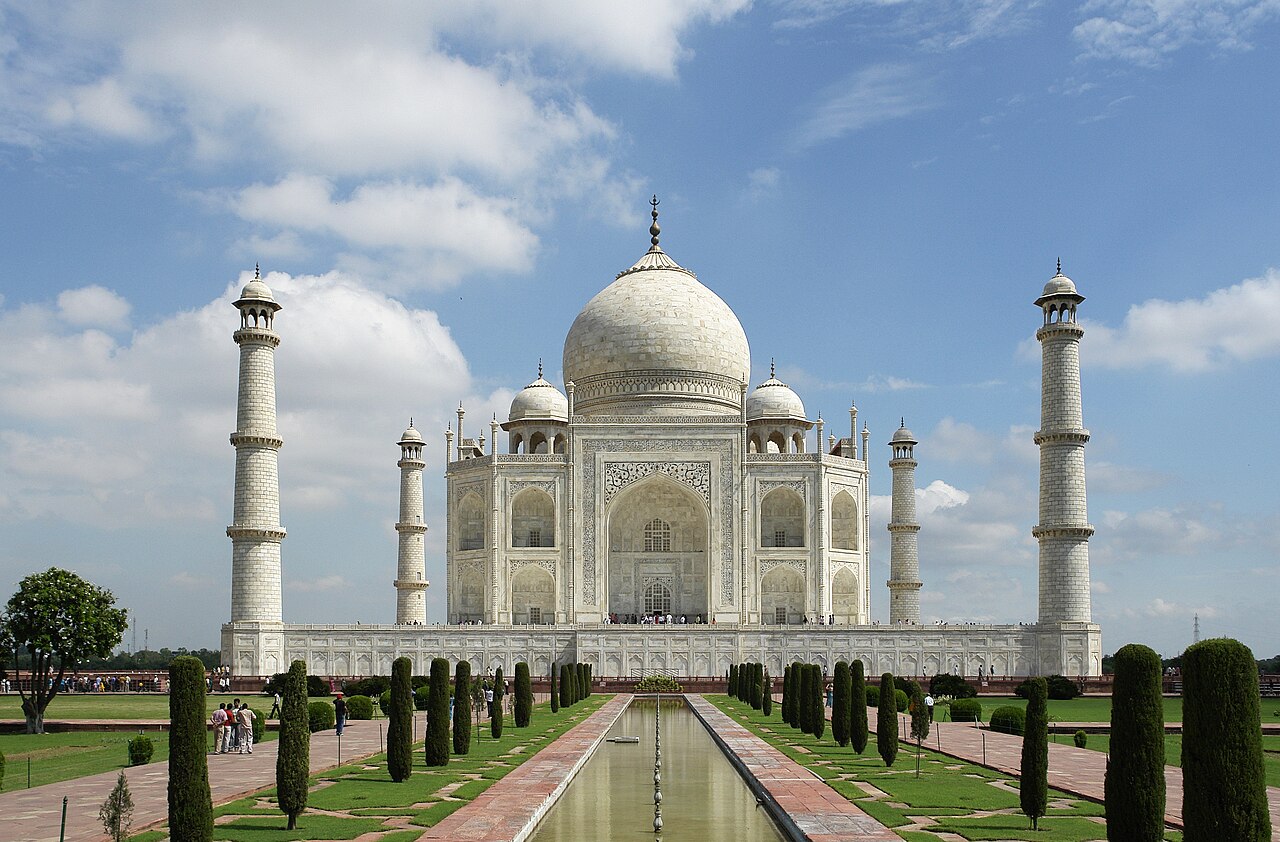
Uttar Pradesh — From the Taj Mahal to the Ganges, India's Spiritual Core
India's most populous state is its spiritual, historical, and mythological heartland — home to the Taj Mahal, the burning ghats of Varanasi, the birthplace of Lord Rama at Ayodhya, the Krishna birthplace at Mathura, the Nawabi refinement of Lucknow's biryani and chikan embroidery, and the world's largest periodic gathering of humanity at the Kumbh Mela.
Overview
Uttar Pradesh — home to 240 million people, making it the world's most populous sub-national entity after a handful of countries — occupies the central Gangetic plain. The Ganges and its tributaries (Yamuna, Ghaghra, Gomti, Ken, Betwa) water one of the world's most fertile agricultural regions, and the plain's flatness allowed civilisations to spread without natural barriers. The result is an unbroken cultural continuum from the Indus Valley period through the Vedic age, through the Mahabharata and Ramayana epics (much of whose action takes place here), through the Buddhist and Jain flourishing, through the Gupta Golden Age, through Mughal imperial glory, to the present.
Top Places to Visit
- Agra: The Taj Mahal — a UNESCO World Heritage Site, built by Shah Jahan between 1631 and 1653 as a mausoleum for his wife Mumtaz Mahal — is the world's most recognisable building and undeniably the most accomplished building in the Mughal canon. The Agra Fort and Itmad-ud-Daulah's Tomb (the "Baby Taj") complete the Agra triangle. Fatehpur Sikri — the abandoned Mughal capital 37 km west — is equally extraordinary.
- Varanasi: One of the world's oldest continuously inhabited cities — pilgrims, sadhus, and silk weavers have lived on the western bank of the Ganges here for at least 3,000 years. The dawn boat ride watching the Ganga Aarti from the river, the burning Manikarnika and Harishchandra ghats, and the lanes of the old city — each a sensory overload of marigolds, incense, and temple bells — constitute an experience unlike anywhere else on earth.
- Vrindavan and Mathura: The birthplace of Lord Krishna (Mathura) and the forest where he spent his childhood (Vrindavan) — a cluster of 5,000+ temples in a small area, most vibrant during Holi (the world's most joyful colour festival originates here) and Janmashtami (Krishna's birthday).
- Lucknow: The city of the Nawabs — the capital of the former Awadh kingdom retains its Nawabi character in its architecture (Imambara complex, Rumi Darwaza, Chattar Manzil), its language (the most refined Urdu in India), its cuisine (Tunday Kababi's galouti kebabs, dum biryani), and its chikan embroidery (white-on-white hand embroidery of extraordinary delicacy).
- Prayagraj (Allahabad): The Triveni Sangam — the confluence of the Ganges, Yamuna, and the mythical Saraswati — is the holiest confluence in Hinduism and the site of the Kumbh Mela (every 12 years, drawing 100 million visitors — the largest peaceful human gathering in world history). The Allahabad Fort (Mughal-era) and the Ashoka Pillar within it are also significant.
- Dudhwa National Park: A terai forest park near the Nepal border — one of India's finest swamp deer (barasingha) habitats and an important tiger and elephant reserve rarely visited compared to more famous parks.
Culture and Heritage
UP is India's cultural capital in many ways — Hindi literature, classical music (the Banaras Gharana of Hindustani vocal music), Kathak dance, weaving (Varanasi silk brocade, Lucknow chikan), and Islamic art (the Agra inlay tradition of pietra dura) all have their centres here. The Ramcharitmanas — the vernacular retelling of the Ramayana by Tulsidas, composed in Varanasi in the 16th century — is arguably the most read text in Indian history.
Cuisine
UP's culinary range is enormous. Lucknowi Dum Biryani and galouti kebabs represent the apex of Mughal-derived Indian Muslim cooking. Varanasi's Tamatar Chaat (tomato chaat with fried bread) and the Banarasi paan (betel leaf preparation) are iconic street foods. Agra's Petha (a crystalline gourd sweet) is one of India's most distinctive regional sweets. The dhaba breakfast of Bedai (fried bread) with Subzi (potato-pea curry) is UP's morning ritual.
Best Time to Visit
October to March. The Taj Mahal in winter morning mist is the quintessential Agra experience. Varanasi's Dev Diwali (November) when 100,000 lamps are lit on the ghats is extraordinary. Holi in Vrindavan (February–March) is the world's most spectacular colour celebration.
How to Reach
Lucknow and Varanasi airports have good connectivity. Agra's Yamuna Expressway connects it to Delhi (200 km, 3 hours). The Shatabdi and Vande Bharat express trains from Delhi reach Agra in 2 hours.
Travel Tips
- Visit the Taj Mahal at sunrise — photography is most beautiful then and crowds thinnest.
- The Taj is closed on Fridays.
- Varanasi's lanes are disorienting — hire a local guide for the first morning. Get lost on the second.
- Carry cash in Varanasi — many ghats and small establishments are cash-only.
Have a better photo of Uttar Pradesh — From the Taj Mahal to the Ganges, India's Spiritual Core?
Upload your own photograph. If we approve it, you earn between 1 and 10 paise. Every photo is checked by our team before it appears.
Share this
Comments
Stay in Uttar Pradesh
Next in the journal
Uttar Pradesh
Lucknow — City of Tehzeeb
Capitals · The Awadhi court refined everything it touched: language ('pehle aap'), kathak, chikankari, and a kitchen tha...
Uttar Pradesh
Ayodhya — Where the Vanvas Began
Ramayana · Ayodhya, capital of Kosala on the Sarayu river, is where the Ramayana opens: the ageing Dasharatha announces...
Uttar Pradesh
Shringverpur — Kevat and the Crossing of the Ganga
Ramayana · At Shringverpur, kingdom of the Nishad raja Guha, the boatman Kevat famously insisted on washing Ram's feet b...