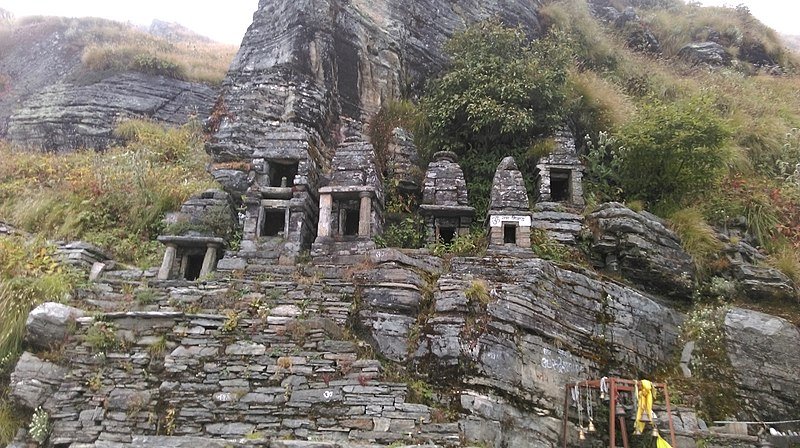
Uttarakhand can easily charm anyone with its beauty. The magical landscape with snow capped mountains, wavering streams, captivating meadows, alluring glaciers and breathtaking lakes, all make Uttrakhand an anticipated tourist destination. And with the added mystic touch of alluring temples, this place is nothing less than heaven. Rudranath, a part of the Panch Kedars is one such spiritual abode in the heart of Uttarakhand.
Rudranath literally meaning - Him who's angry is a holy temple of Hindus dedicated to lord Shiva, located in the Garhwal Himalayan Mountains in Uttarakhand, India. Situated at 3,600 metres above sea level, it is the third temple to be visited in the Panch Kedar pilgrimage.
Rudranath is a natural rock temple situated within a dense forest of Rhododendron dwarfs and Alpine pastures. The mountain peaks of Trisul, Nanda Devi, Devasthan, Hathi Parbat and Nanda Ghunti are visible from Rudranath offering a spectacular view. The trek to Rudranath can be started from Sagar, Helang or Urgam villages. It infuses the adventure and spiritual enthusiasts with diverse beauty of nature. The deep gorges and charming forests enroute add to the ethereal beauty. However, Rudranath is one of the most difficult treks of Panch Kedars, but it is worth the pain because of the amazing view of the surrounding mountains. The unspoiled beauty of the grassy meadows and thick woodlands as you pass through is sure to mesmerize and allure you while the difficult terrain will add to the thrill.
As you get closer to the temple, your spirit is soaked in Divine bliss. 100 meters before the temple is the idol of Narada Muni. Closer to the temple are the idols of Pandavas in separate temples. The main temple has several holy water tanks located alongside that are Surya-kund, Chandra-kund, Tara-kund, Mana-Kund and many more. Nanda Devi, Trishul and Nanda Ghunti are the famous mountain peaks, which serve as the scrim to the temple. Lord Rudranath is worshipped as a grey stone icon and fulfils wishes of people. Apsaras or maidens from heaven are known to visit the temple at night. The sacred river Vaitarani flows near the temple. Recognised as the "river of salvation", this river is considered as a pathway for souls of the dead to cross and reach the other world. Thus, devotees visit Rudranath to perform rituals of the deceased souls, such as executing a pind offering. It is believed that executing a pind to ancestors here equals offering a hundred million at the holy city of Gaya. During winters, an idol of Lord Shiva is brought to Gopinath Mandir in Gopeshwar for worship. The Doli Yatra starts from Gopeshwar via Sagar. The Doli Yatris crosses LyutiBugyal and Panar and ultimately reach the final destination Pitradhar. The worship of ancestors is done here. Dhalabni Maidan is then crossed after which the Doli (idol of Shiva), reaches the holy site of Rudranath. Here first the Vandevi is worshipped who shields and protects the area. The temple celebrates an annual fair on the full moon day in the Hindu month of Sravan which is mainly attended by the locals. The priests at the Rudranath temple are basically Bhatts and Tiwaris belonging to Gopeshwar.
The temple dates back to the Mahabharat times and is known to be established by Pandavas when they were searching for Lord Shiva after the battle of Kurukshetra. They wanted to atone their sins by seeking His blessings. Lord Shiva was however not willing to see them and took the form of a bull and tried to bury himself into the earth. However, Bheema recognized Him and a tug of war ensued as Bheema pulled the bull’s tail. As a result the bull divided into six parts with one found in Nepal and the remaining five scattered at the Panch Kedars. Rudranath temple is established at the place where the face of Mahadev appeared.